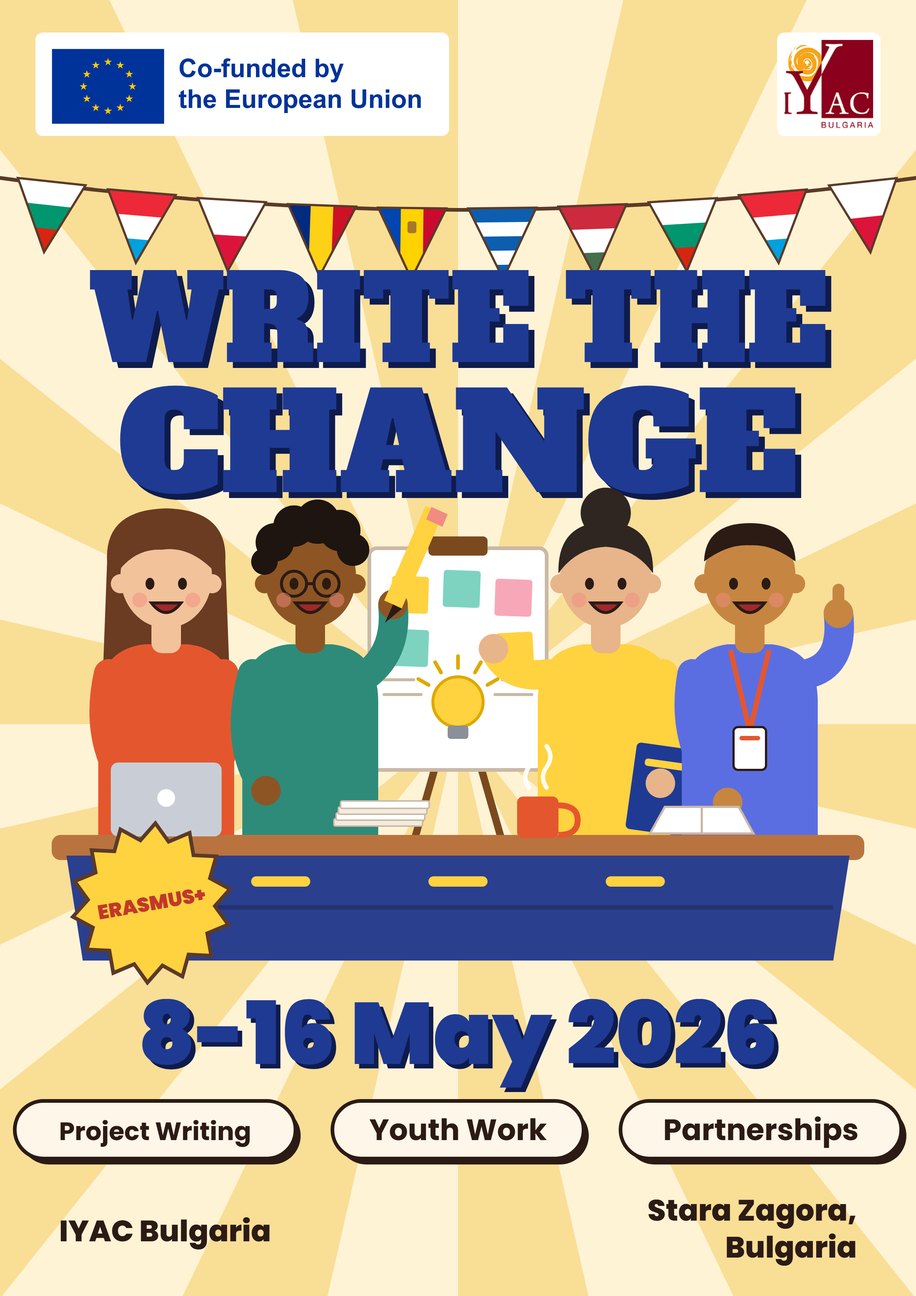
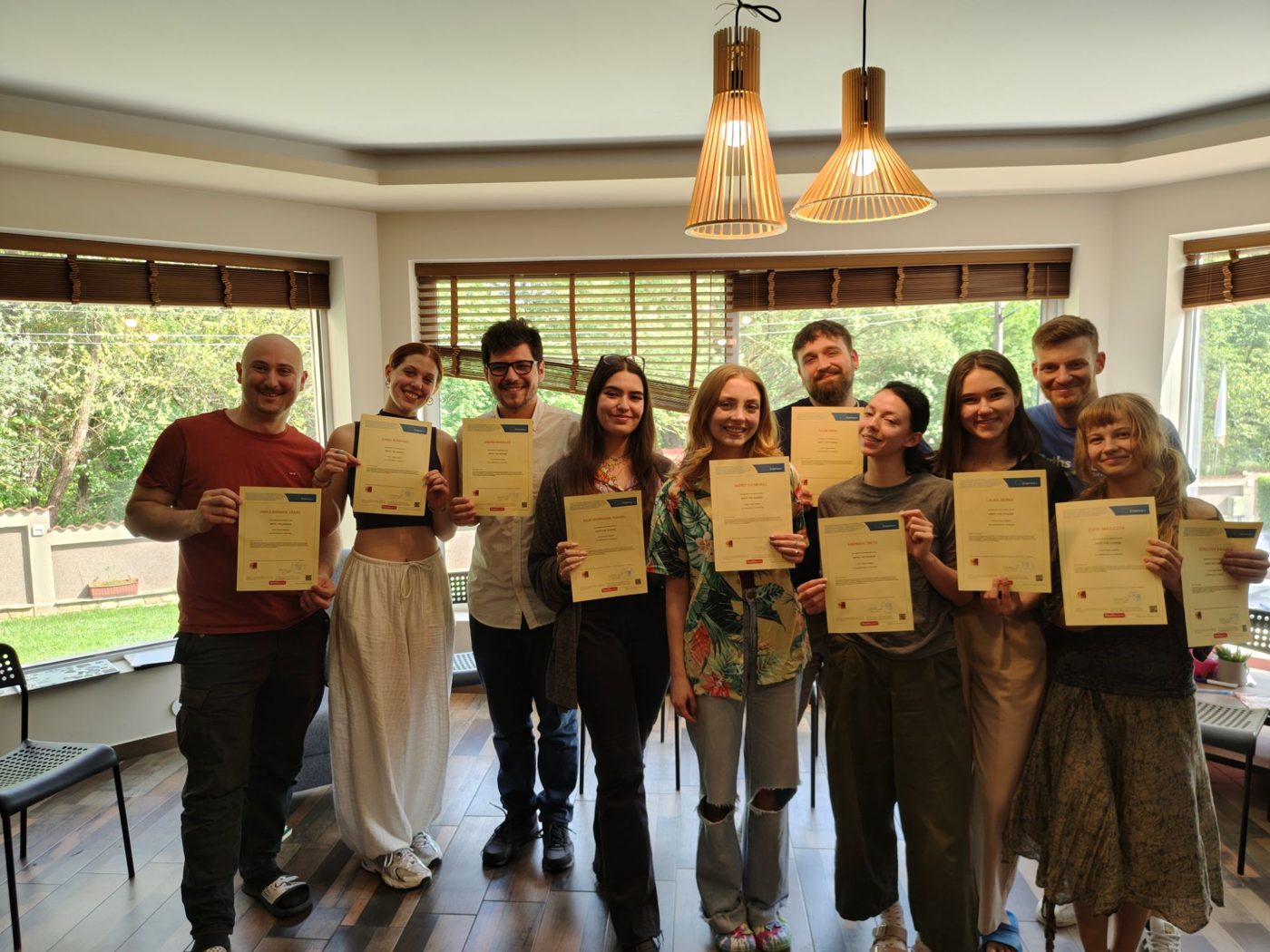
"Write the Change" brought youth workers from seven countries to Stara Zagora for an Erasmus+ training course on how to design and write quality Erasmus+ projects. The course was built for a mixed group: experienced project writers working side by side with newcomers who had never prepared an application before. Its aim was to take participants through every stage of the project cycle, from identifying the real needs of young people in their communities to writing the application, planning dissemination, evaluating results and reporting.
The first day was dedicated to building trust within the group. Through team-building activities, games and challenges, participants from Bulgaria, Luxembourg, Poland, Romania, Moldova, Greece and Hungary got to know each other and started forming the partnerships they would rely on for the rest of the week.
On the second day, participants explored the range of opportunities the Erasmus+ programme offers to organisations and youth workers, from KA1 mobility projects to KA2 partnerships. Special attention went to Youth Participation Activities, Small-Scale Partnerships, cooperation projects and new ways for organisations to involve young people and local communities. Instead of only listening to presentations, participants presented the different funding formats to each other through short theatre-style performances, which made complex programme rules easier to understand and remember. In the afternoon the group turned to local realities: through debates, group research and discussion, they examined the social issues that affect young people in their countries and how an organisation can properly identify needs before designing a project.
Day three took the training out of the classroom and into Plovdiv, one of the oldest continuously inhabited cities in Europe. Alongside discovering the city's history and culture, participants completed a field exercise connected to project planning, working in international teams to observe local realities and identify possible community needs.
From day four, the ideas began to turn into real projects. Participants worked in pairs, each pair combining one experienced youth worker with a newcomer, so that peer learning and confidence-building were part of the writing process itself. Using research, local data and their daily experience with young people, the pairs chose their project topics and laid the foundations of future Erasmus+ initiatives. The group also studied the structure and logic of the KA152 (Youth Exchanges) and KA154 (Youth Participation Activities) application forms and built shared approaches to answering their questions.
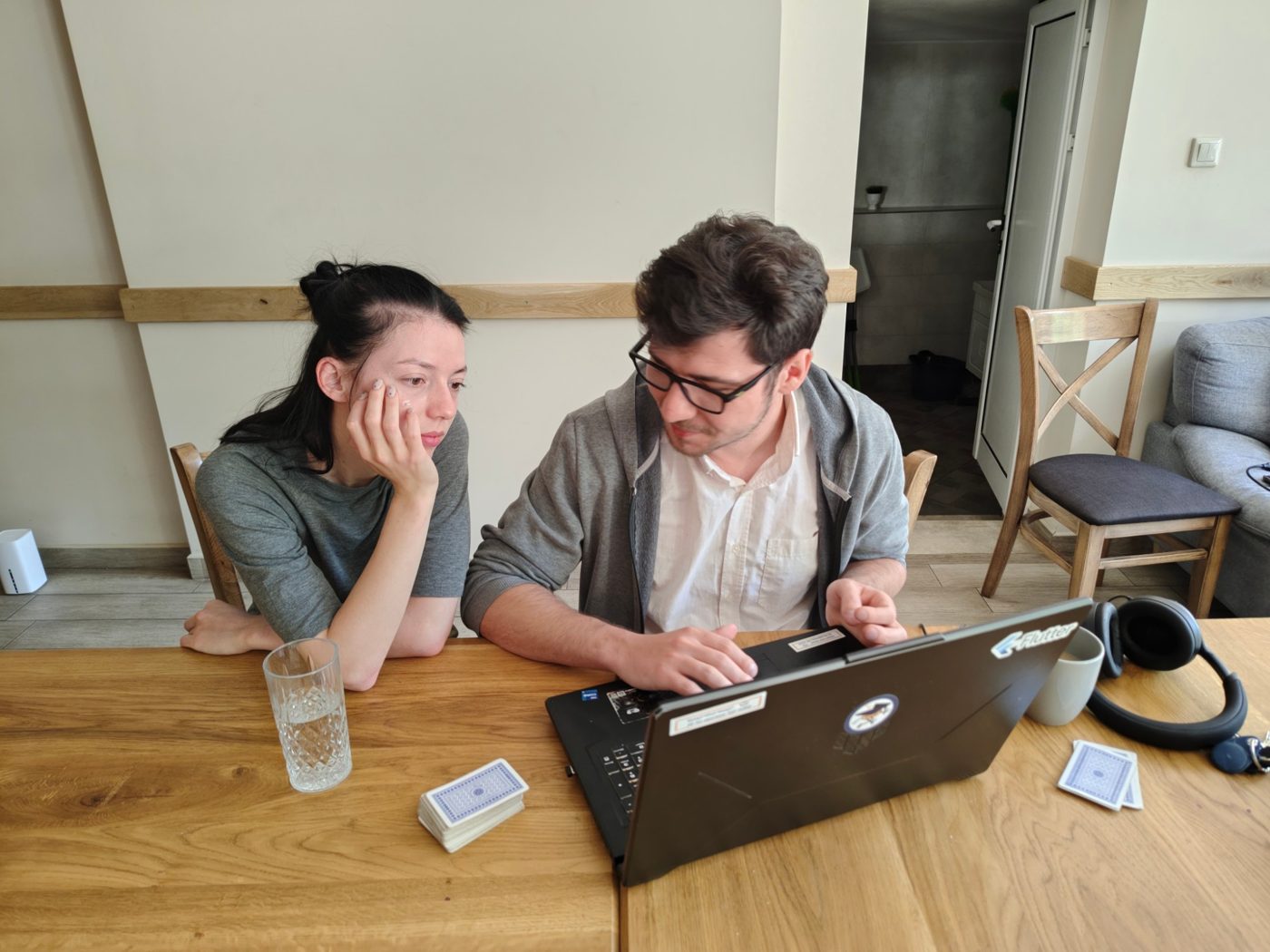
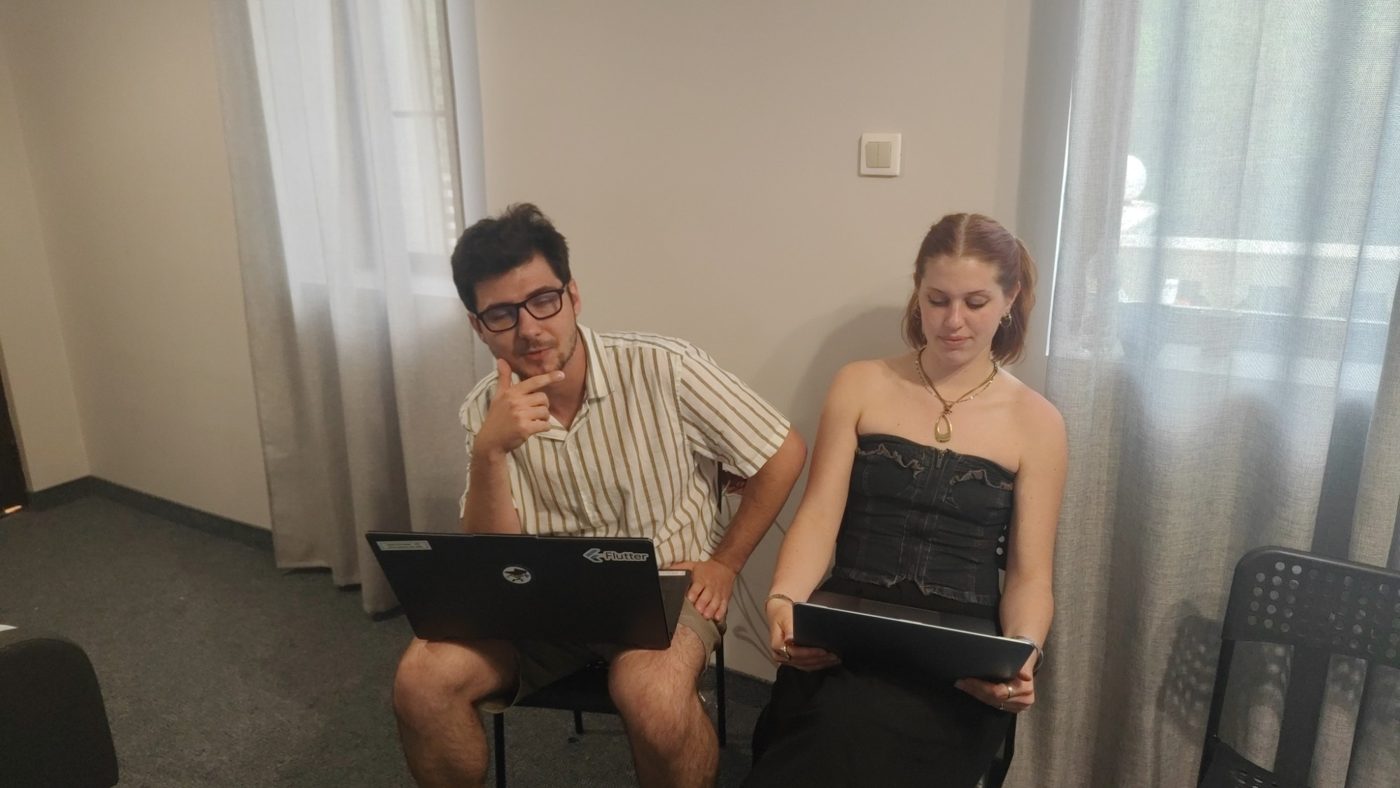
On day five, the teams developed their concepts into detailed project plans. The focus was on designing engaging activities based on non-formal education and describing those methods properly in an application form. Participants learned to build project schedules and timelines, including the official timetable templates for Youth Exchanges and month-by-month planning for Participation Projects. They also worked with the SALTO-YOUTH platform and the Erasmus+ Quality Standards, analysing how quality, inclusion, participation and learning outcomes should run through every part of a project.