Smart Youth Worker

AI and digital skills for youth work

Dates
2–10 November 2026
Location
Stara Zagora, Bulgaria
Countries
Bulgaria, Spain, Albania, Romania, Moldova, Lithuania
Format
Erasmus+ Training Course
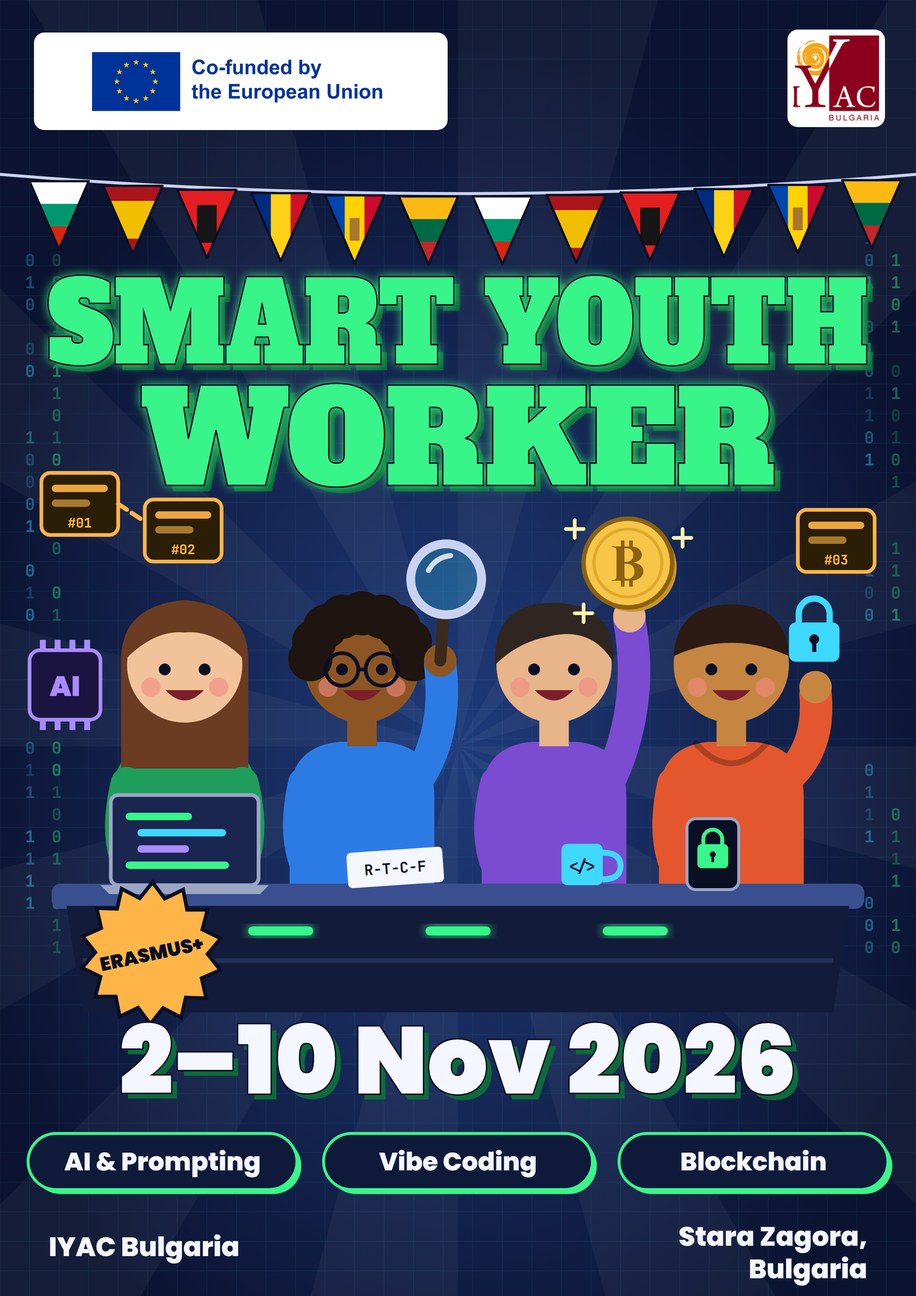
Smart Youth Worker poster

What the course tackled

Five topics at the heart of the week

  • Fighting cyber crime and scams

    Participants learned to spot the red flags of online scams, analysed famous hacks and saw how most attacks trick people, not code.

  • Security

    Strong passphrases, two-factor authentication and data-leak checks, researched by the teams and turned into lessons for teenagers.

  • Online safety

    OSINT on their own digital footprint, photo metadata, public cameras, GDPR and the safe use of AI tools.

  • Blockchain

    How blockchain and crypto work, learned by becoming a blockchain in the riddle chain, plus how to stay safe from crypto scams.

  • Vibe coding

    Building real websites and apps by describing them to AI in plain language, then publishing them online with GitHub Pages.

"Smart Youth Worker – AI and digital skills for youth work" was an Erasmus+ training course that brought youth workers from Bulgaria, Spain, Albania, Romania, Moldova and Lithuania to Stara Zagora to learn how to teach digital skills to young people. None of it required a tech background. Every theory input was followed straight away by something participants did, and by the end of the week every participant had built and published their own website, app or learning platform.

The course opened on 3 November with teambuilding, the project's objectives and a first look at the threat everyone has already met: online scams. In the "Spot the Scam" activity, teams raced to find four red flags hidden in a fake prize message: an unknown sender, free stuff, fake urgency and a look-alike link. The stories participants shared afterwards were the real lesson.
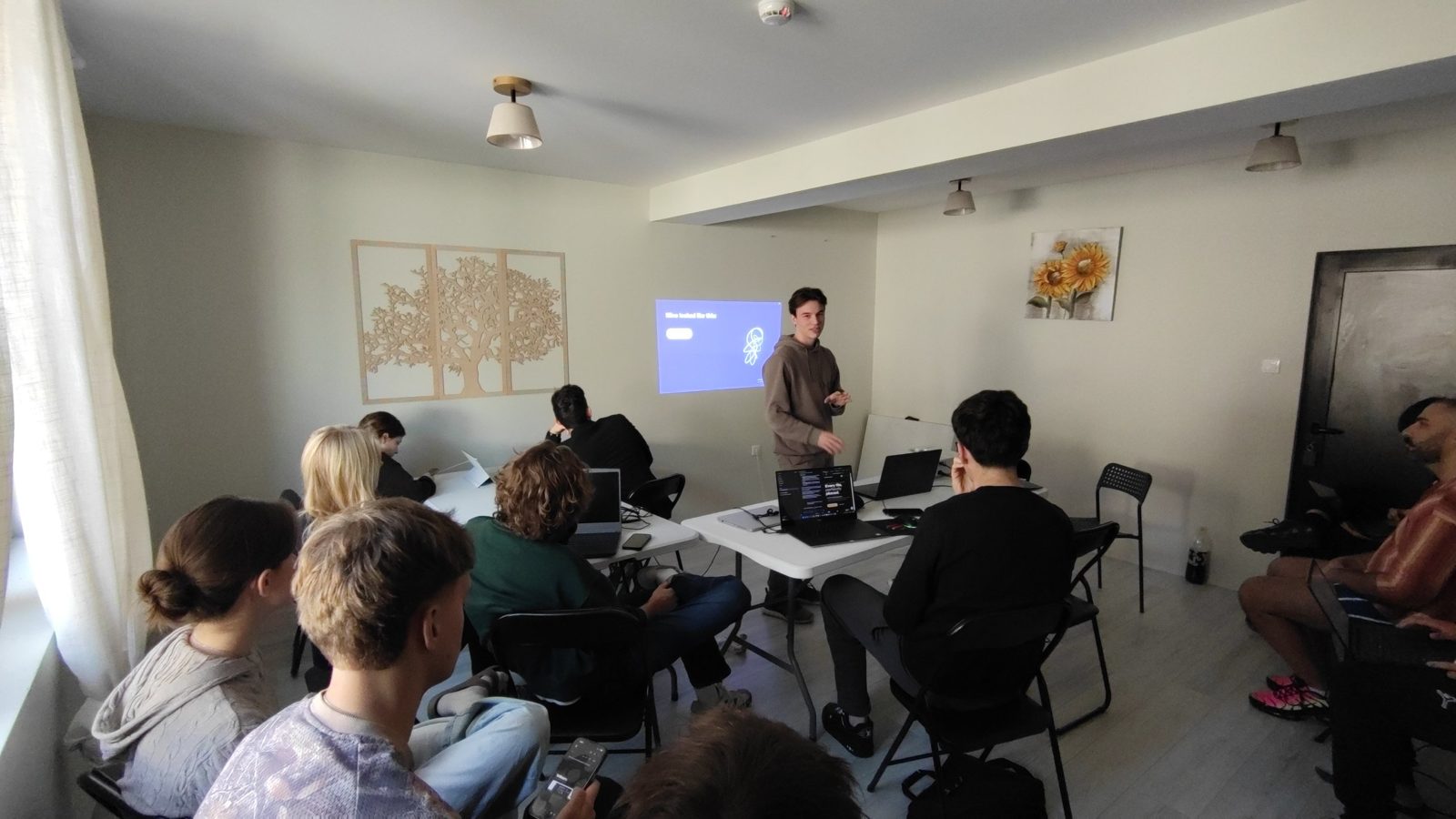
The whole room watches a participant present his project

Day two was dedicated to AI in youth work. In the "Prompt Like a Pro" workshop, participants learned the R-T-C-F formula (Role, Task, Context, Format) and put it straight into practice in two team games. In the first, each team used AI to research and design a five-slide presentation for teenagers on keeping their Google, Facebook and Steam accounts safe, with a source for every fact. In the second, Prompt Pictionary, teams wrote and rewrote prompts until their AI image matched a secret target. The afternoon brought an AI tool map of the group and the first round of vibe coding: building software by describing it to an AI in plain language.

On day three, participants turned their first drafts into working projects and tested them on their phones. They built a city guide with missions around Stara Zagora, a volleyball learning app, a site that makes politics simple for first-time voters, a habit tracker with game-style rewards, a website for a small tiling business and creative portfolios. The evening belonged to the Albanian, Lithuanian and Bulgarian teams.
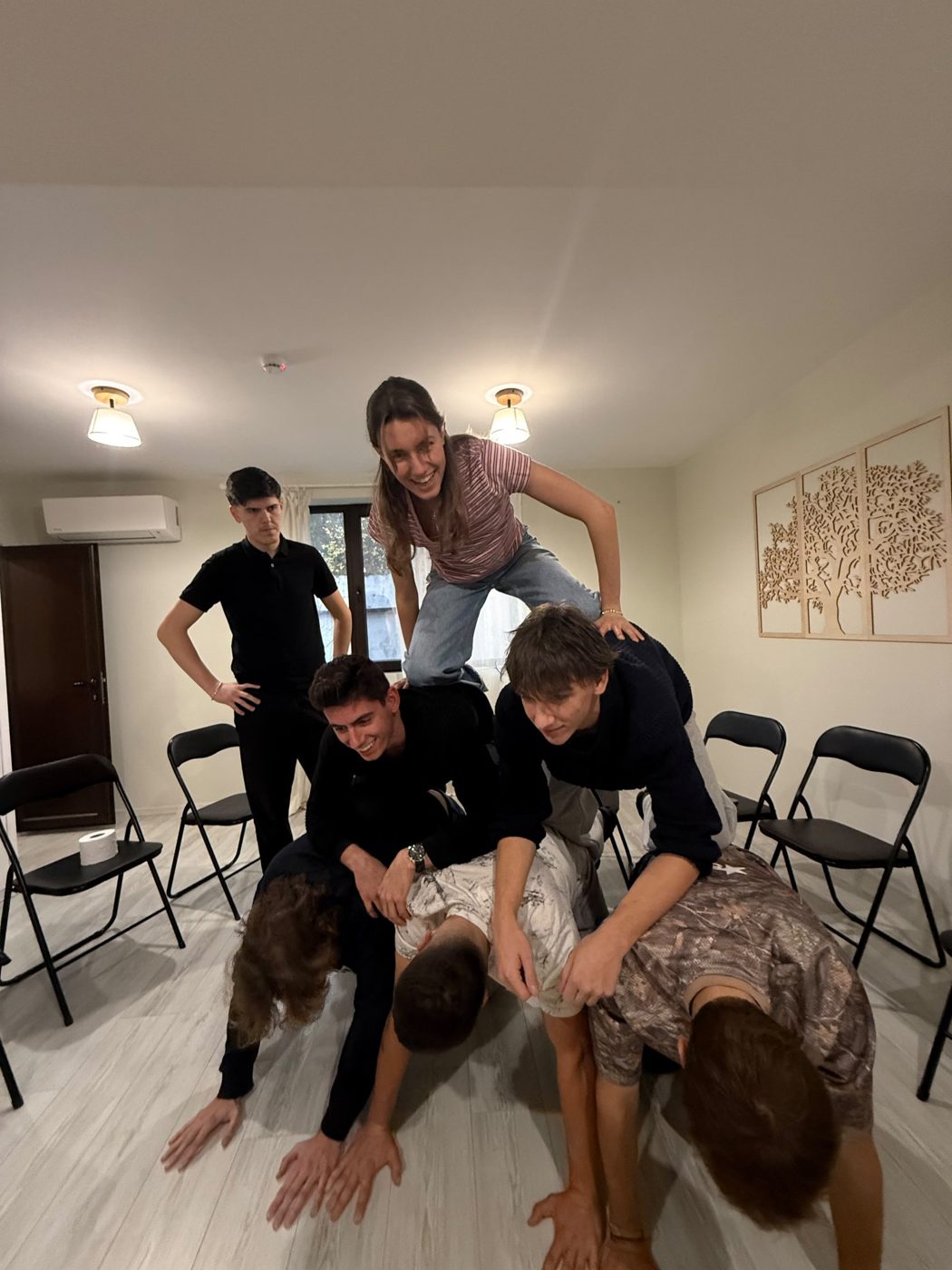
Participants build a human pyramid during a teambuilding game
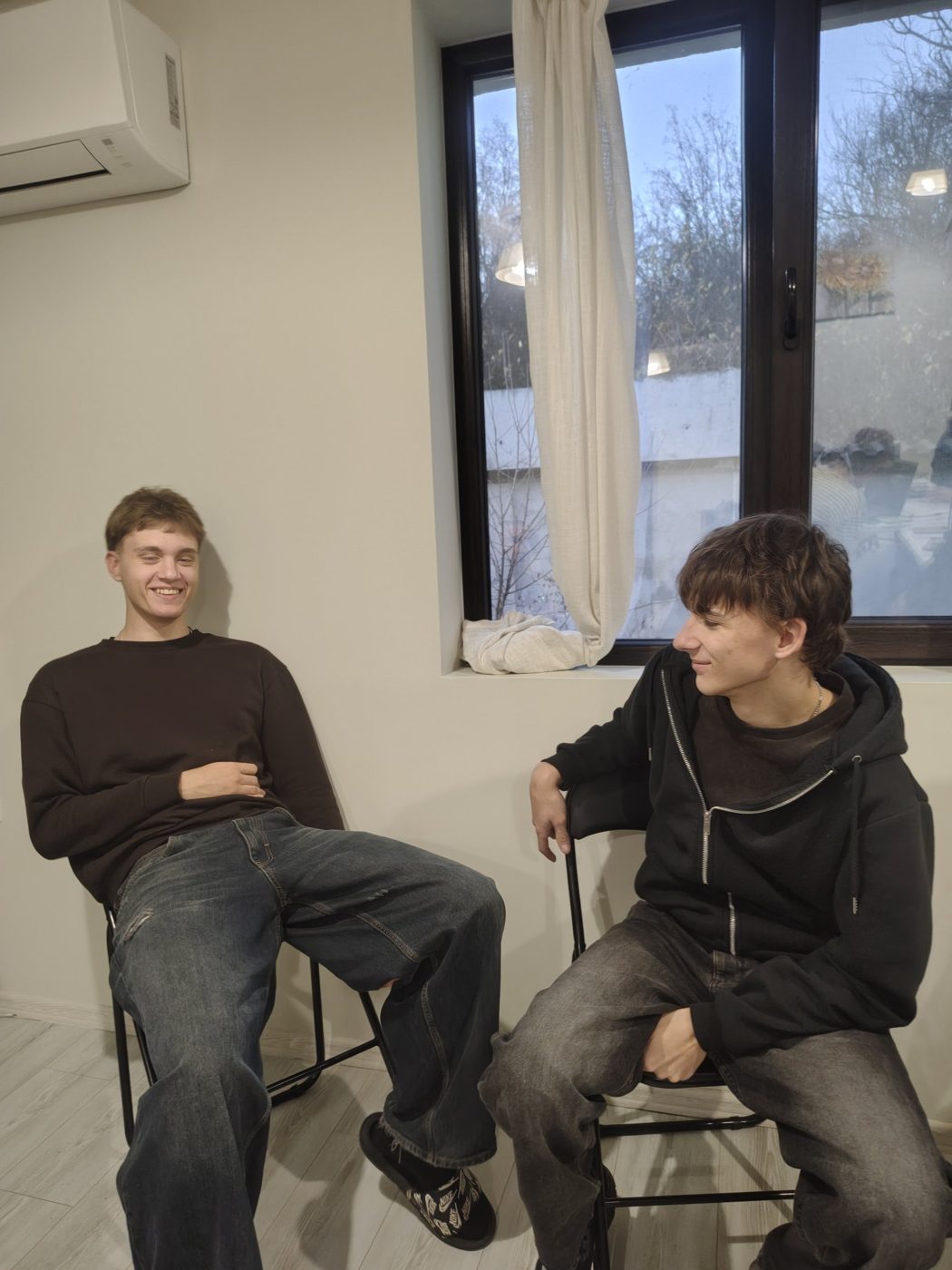
Two participants laughing between sessions

After three intense days in front of screens, day four was a cultural day without them: participants explored Bulgarian culture and the city of Stara Zagora, rested and recharged.

On day five, participants finished their projects, published them online with GitHub Pages and presented them in short pitches. The afternoon workshop on OSINT (open-source intelligence) began with participants investigating their own digital footprint: searching their names, checking data leaks, following their usernames and looking at what their photos reveal. The group then analysed famous online hacks and how they could have been prevented.

Day six turned participants into investigators. In a digital treasure hunt, teams followed a fictional developer's trail of clues across GitHub, X, Instagram, Reddit and the web archive, from hidden photo metadata to deleted files still sitting in the code history. The story behind it was a data protection case, which made GDPR feel real. Teams also gave each other feedback on their projects and improved them.

On the final day, the group learned how blockchain works in ten minutes and then became one: in the riddle chain, three teams solved riddles to "seal" each block, until a hacker changed the first block and the whole chain broke. A session on live tracking and public cameras asked where the line is between public and private.
The course ended with reflection, evaluation and Youthpass certificates for all participants. Each of them returned home with a live project on their phone, five ready-to-use methods and a guide for teaching digital skills to young people.

Main impacts

  1. Youth workers gained the confidence to teach digital skills without a tech background, using free tools that work for every young person.
  2. Participants learned to use AI effectively and critically, writing clear prompts and checking AI's answers against real sources.
  3. Online safety became part of everyday youth work: recognising scams, securing accounts, protecting one's digital footprint and applying GDPR in practice.
  4. Participants strengthened their entrepreneurial and freelancing skills by developing ideas, building products for real users and pitching them.
  5. Intercultural competence grew through daily teamwork in international groups and cultural evenings from across the partner countries.

Results and outputs

  • Every participant built and published their own website, app, portfolio or learning platform with vibe coding, hosted on GitHub Pages.
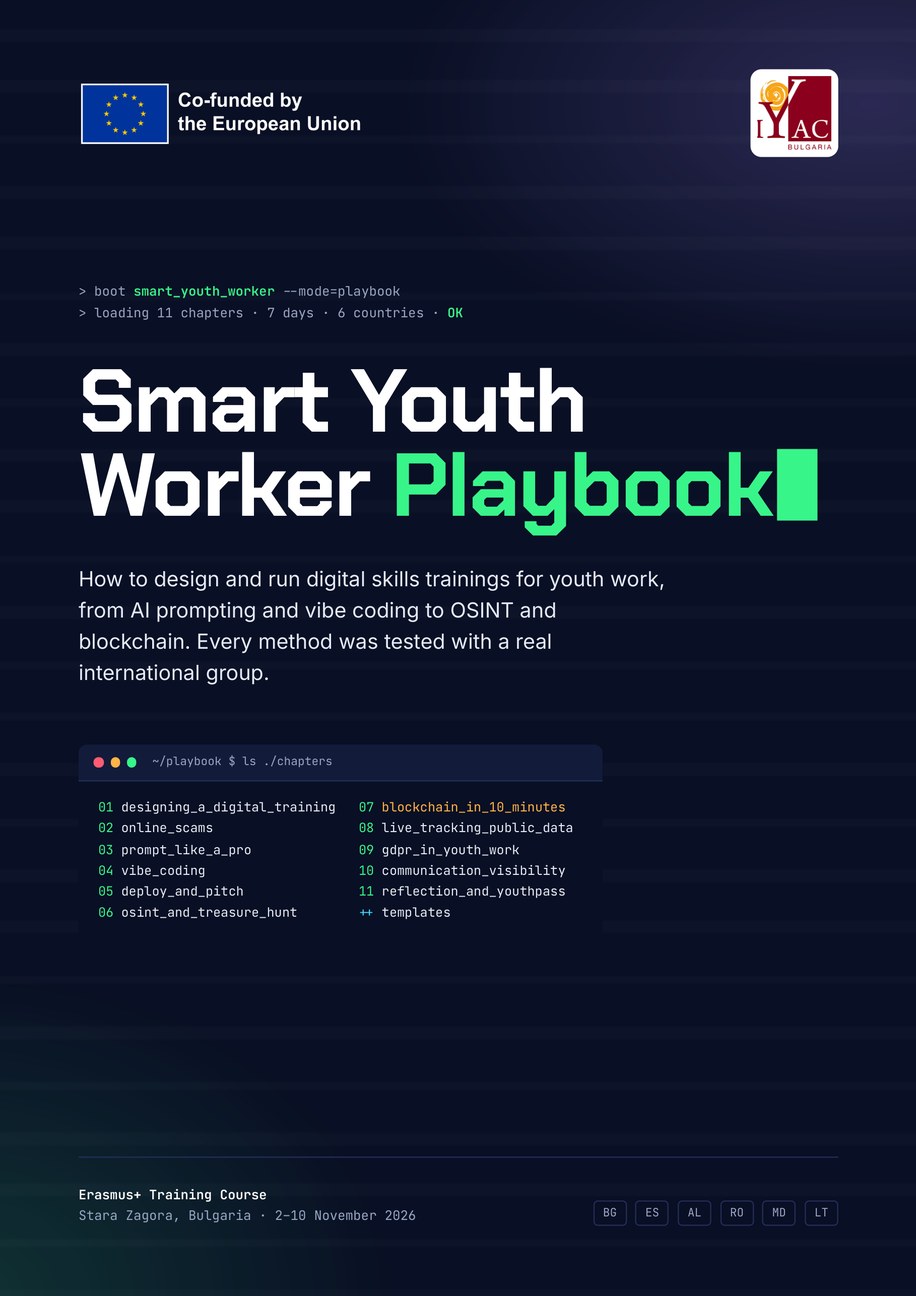
  • A guide on teaching digital skills to young people and using vibe coding in youth work: the Smart Youth Worker Playbook.
  • Five ready-to-use non-formal methods: Spot the Scam, Prompt Pictionary, the AI safety presentation challenge, the OSINT treasure hunt and the blockchain riddle chain.
  • Youthpass certificates for all participants.
Smart Youth Worker Playbook cover

Download

Smart Youth Worker Playbook

How to design and run digital skills trainings for youth work, from AI prompting and vibe coding to OSINT and blockchain. Every method was tested with a real international group.

  1. Designing a digital training
  2. Online scams
  3. Prompt Like a Pro
  4. Vibe coding
  5. Deploy and pitch
  6. OSINT and the treasure hunt
  7. Blockchain in 10 minutes
  8. Live tracking and public data
  9. GDPR in youth work
  10. Communication and visibility
  11. Reflection and Youthpass
  12. Templates
Download the Playbook PDF · 1.7 MB · English
Co-funded by the European Union

Funded by the European Union. Views and opinions expressed are however those of the author(s) only and do not necessarily reflect those of the European Union or the European Education and Culture Executive Agency (EACEA). Neither the European Union nor EACEA can be held responsible for them.

Our projects